

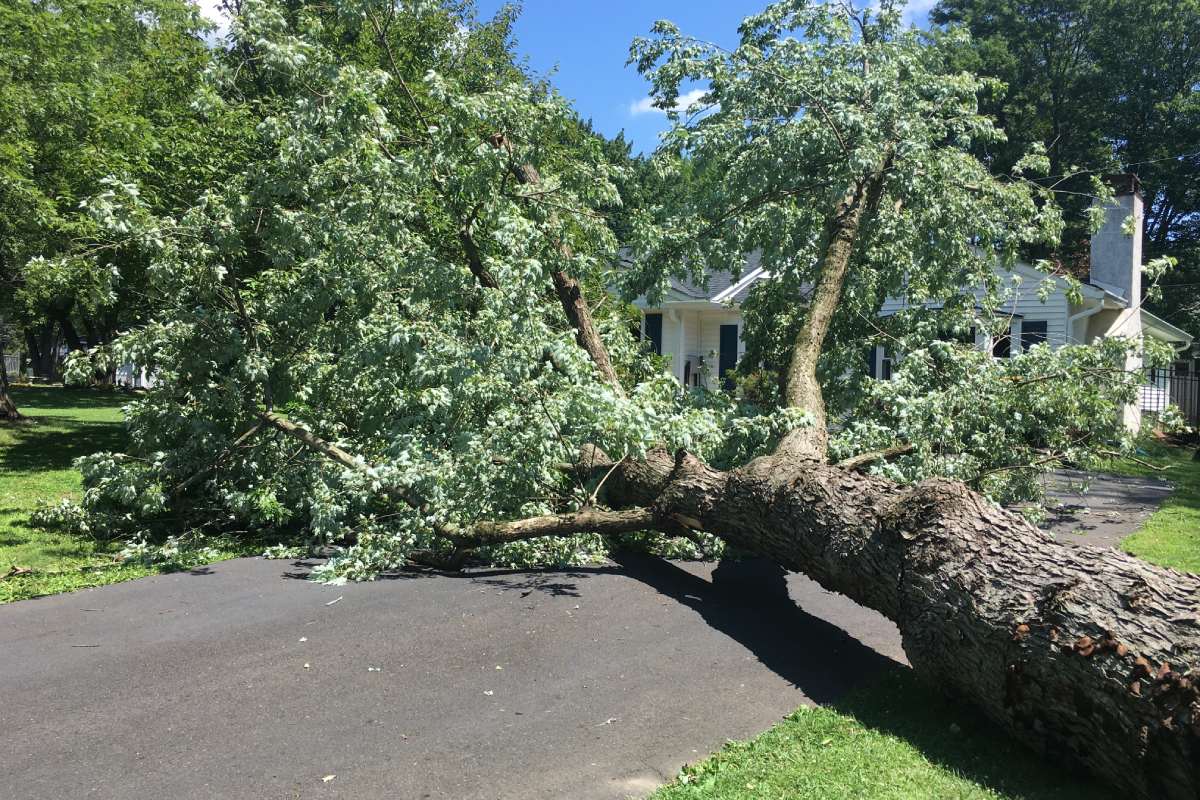
Every year, as storm season approaches, homeowners go through a familiar mental checklist. You clean out the gutters, check the roof for loose tiles or damaged shingles, clear debris from drainage grates, and ensure outdoor furniture is securely stored. These proactive steps protect your home from water damage, structural leaks, and windborne debris. However, even the most meticulous property owners often overlook one of the largest structural hazards on their land: their trees.
Trees are often viewed as permanent, indestructible elements of the landscape. Because they grow slowly and stand firm through everyday weather, it is easy to assume they will withstand severe storms without issue. In reality, a large, poorly maintained tree poses a far greater threat to your home, vehicles, and personal safety than a few clogged gutters or missing roof tiles. When extreme weather strikes, high winds and rain-soaked soil can quickly turn an overlooked structural flaw into an expensive emergency.
Understanding the risks hidden in your canopy, recognising early warning signs, and taking proactive measures can protect your property while preserving the long-term health of your trees.
The Blind Spot in Home Maintenance Checklists
Proactive home maintenance centres around managing risk. You perform routine energy audits to prevent costly power bills in winter, and you act quickly at the first sign of a pest infestation to prevent structural timber damage. Yet, tree care rarely makes the routine checklist until a branch snaps or an entire trunk falls across a driveway.
This blind spot exists largely because trees change gradually. A branch decay process or a slow root rot issue can take years to develop, rendering the gradual decline nearly invisible to the untrained eye. During normal weather conditions, an unstable tree may appear fine. However, gale-force winds act as a continuous lever on the trunk, while heavy rainfall saturates the soil and degrades the root system’s anchor. When wind drag meets weak wood or compromised roots, sudden structural failure occurs.
A single mature branch falling from a height of twenty feet carries enough kinetic energy to crush roof trusses, destroy vehicle frames, and tear down power lines. Taking a proactive approach to tree maintenance bridges this safety gap, ensuring your landscape remains an asset rather than a severe liability.
Recognising the Warning Signs: How to Spot a High-Risk Tree
You do not need a degree in arboriculture to conduct an initial visual inspection of your property. By examining your trees from root plate to upper canopy, you can identify clear red flags that indicate a tree requires immediate professional evaluation.
1. Dead, Hanging, or Compromised Branches
Deadwood is one of the most immediate hazards during severe weather. Branches that have lost their foliage, show peeling bark, or appear brittle can break off easily in high winds. Pay close attention to large dead branches positioned directly over high-value targets, such as your house, garage, driveway, patio, or a neighbouring property line. Hanging branches that have already detached but remain lodged in the canopy—often called “widow-makers”—pose an immediate danger and must be removed.
2. Uncharacteristic Leaning and Soil Heaving
While many trees naturally grow at an angle toward sunlight, a sudden or newly developed lean is a major warning sign. Inspect the ground surrounding the base of the trunk. If you notice cracked, raised, or bulging soil on the side opposite the lean, or if roots are becoming freshly exposed, the root plate may be failing. Rainstorms worsen this condition by loosening saturated soil, making root plate failure and total tree collapse significantly more likely.
3. Fungal Growth, Cavities, and Trunk Decay
Fungi growing around the root flare or directly on the trunk—such as bracket fungi or mushrooms—are clear indicators of internal decay. Wood-decay fungi feed on the structural lignin and cellulose inside the tree, weakening its core even while the outer canopy appears green and healthy. Hollow trunks, deep vertical cracks in the bark, or areas where wood feels soft and spongy all indicate severe structural compromise.
4. Canopy Density and Power Line Encroachment
A canopy that is overly dense acts like a sail in the wind, catching strong gusts rather than allowing air to pass through freely. This wind resistance places immense stress on the trunk and root system. Furthermore, branches growing within close proximity to power lines or touching your roofline present severe fire, electrical, and structural hazards.
5. Co-Dominant Stems and Included Bark
Trees that branch into two or more main trunks of equal size—known as co-dominant stems—are inherently weaker than trees with a single central leader. As these stems grow thicker, they press against each other, creating “included bark” that prevents the wood from fusing securely. Under the weight of heavy rain or strong winds, co-dominant stems frequently split down the middle.
| Visual Warning Sign | Potential Underlying Issue | Risk Level During Storms |
| Dead/brittle branches in canopy | Localised wood dieback or disease | High (Branch drop) |
| Mushrooms/fungi at trunk base | Root rot or core sapwood decay | Critical (Root plate failure) |
| Cracked/heaving soil near roots | Root anchor instability | Critical (Total tree blowdown) |
| Dense, overgrown upper crown | Excessive wind resistance (“sail effect”) | Medium-High (Trunk snapping) |
| V-shaped split between stems | Structural weakness / Included bark | High (Stem splitting) |
Preservation vs. Removal: Why Pruning Should Always Be First
A common misconception among property owners is that addressing storm risk means cutting down every large tree near the house. In reality, qualified arborists prioritise tree preservation whenever possible. Removal is a final resort for trees that are dead, dying beyond recovery, or structurally compromised beyond repair.
Professional pruning techniques mitigate storm risk while keeping mature trees intact:
- Crown Thinning: Selectively removing inner, non-essential branches reduces canopy density. This allows wind to pass through the tree freely, significantly lowering the “sail effect” and reducing strain on the roots.
- Deadwooding: Removing dead, dying, or diseased branches eliminates potential hazards before high winds turn them into dangerous projectiles.
- Canopy Lifting: Pruning lower branches increases clearance above roofs, driveways, and structures, preventing friction damage during windstorms.
- Weight Reduction Pruning: Shortening heavy, over-extended limbs reduces structural leverage and decreases the likelihood of major branch failure.
A mature canopy provides valuable shade, lowers home cooling costs, improves air quality, and adds significant real estate value. Retaining healthy trees through targeted, preventive pruning preserves these long-term benefits while maintaining safety.
What to Expect From a Professional Arboricultural Assessment
Tree maintenance involving heights, heavy timber, structural risk, or electrical clearance should never be treated as a weekend DIY project. Attempting to prune large limbs without specialised equipment, rigging knowledge, and safety gear exposes homeowners to severe injury and accidental property damage.
When you hire a qualified tree service, a professional assessment typically includes:
- Comprehensive Site Inspection: An arborist evaluates the overall health of the tree, analysing trunk integrity, root plate stability, canopy weight distribution, and proximity to surrounding structures.
- Hazard and Risk Calculation: The arborist assesses the likelihood of failure against potential target zones (such as your home or driveway) to recommend the safest action plan.
- Transparent Recommendation: You receive a targeted management plan—whether that involves specialised pruning, structural cabling, routine monitoring, or removal—based on genuine risk rather than unnecessary upselling.
- Safe, Insured Execution: Certified crews use specialised rigging, aerial lifts, and safety gear to control the fall of every branch, ensuring full protection for your roof, fencing, and utilities.
- Complete Site Cleanup: Following pruning or removal, professional services clear debris, process wood into mulch, and offer stump grinding to leave the ground level and clean.
For homeowners in Victoria, Arborists Melbourne.com provides a full suite of professional services—ranging from structural pruning and canopy management to stump grinding and rapid emergency removal after severe storms. Their diagnostic, “assess-before-you-cut” approach ensures that tree health and home safety are prioritised equally.
The Economics of Timing: Proactive Care vs. Emergency Response
The cost of routine tree maintenance is a predictable, manageable home expense. In contrast, emergency tree work following a major storm is costly, stressful, and dangerous.
When a severe storm hits a region, emergency tree services face an overwhelming volume of requests. Waiting until a branch punctures your roof or crushes your fence means dealing with higher emergency call-out fees, potential water damage to your home’s interior, and extended wait times as crews triage local hazards.
Scheduling an assessment before storm season offers several advantages:
- Lower Operational Costs: Planned maintenance allows crews to work efficiently with standard equipment access rather than navigating complex emergency conditions.
- Reduced Property Damage: Preventing branch failure keeps your roof, gutters, fences, and vehicles intact.
- Streamlined Scheduling: You secure service at a time that suits your calendar, avoiding the competitive rush that occurs immediately after severe weather hits.
The Insurance Factor: Neglect vs. “Acts of God”
Many homeowners assume that property insurance will cover any damage caused by falling tree branches. However, insurance policies distinguish between unexpected “Acts of God” and damage resulting from neglected property maintenance.
If a severe storm knocks down a healthy, well-maintained tree, home insurance typically covers the structural repair. However, if an insurer determines that the tree was visibly dead, heavily decayed, or compromised long before the storm—and that the homeowner neglected standard maintenance—they may dispute or deny the claim on the grounds of pre-existing neglect. Investing in professional tree assessments provides a clear record of responsible maintenance, protecting both your property and your insurance coverage.
Protecting Your Property and Preserving Your Landscape
Your trees work quietly every day to enhance your landscape, cool your home, and improve your property value. Giving them the same seasonal attention you give your roof, gutters, and heating systems ensures they remain safe, healthy, and beautiful for years to come.
By learning to spot early warning signs and partnering with certified professionals before storm season peaks, you can safeguard your family, secure your home, and enjoy total peace of mind when the next major storm rolls in.